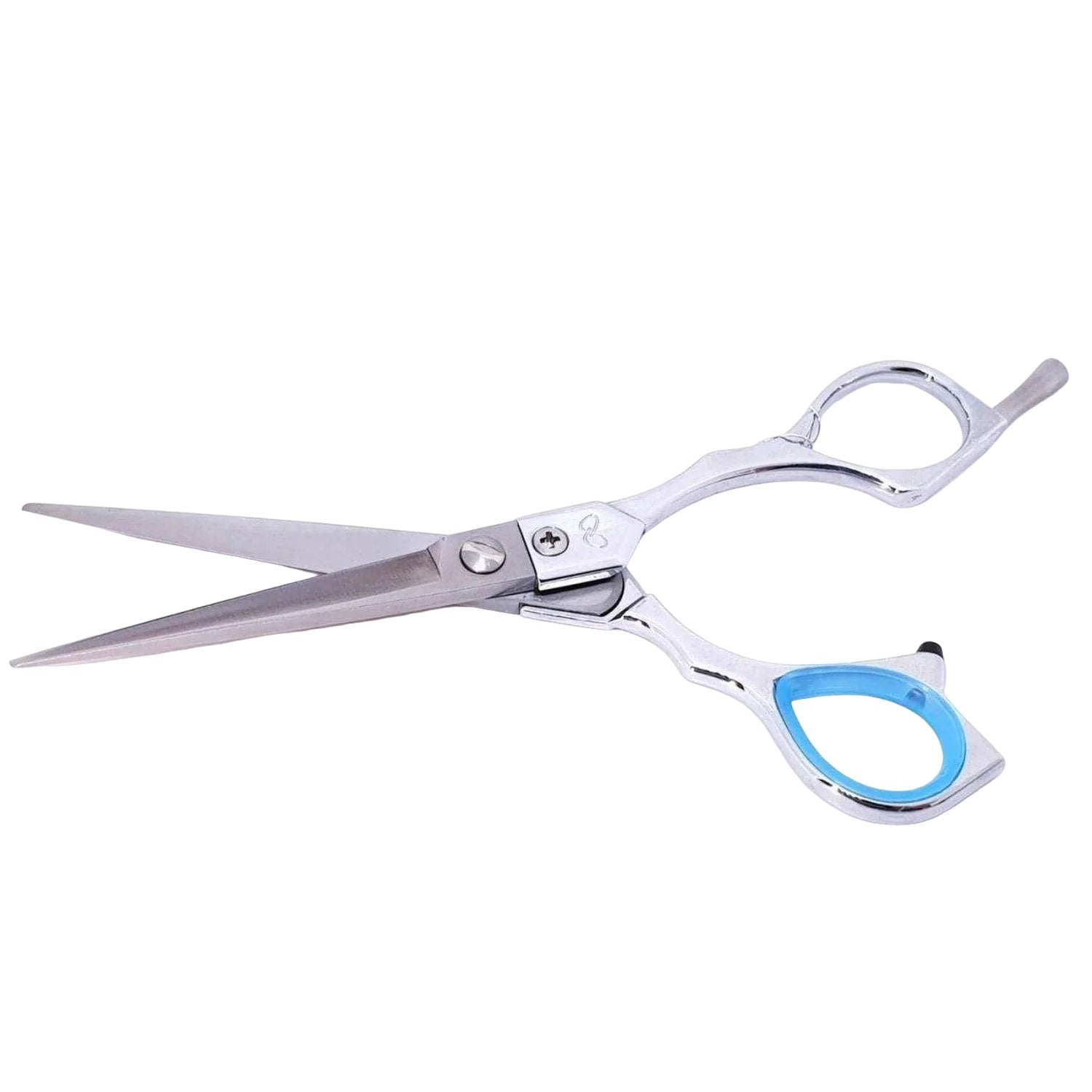
Good scissors don't need much fuss, but they do need a little attention, often. The routine in the main NZ guide covers the basics you'll do every day. This guide goes further: what to check each week and each month, how the different edges and finishes in our range like to be treated, and how to tell when it's time for a sharpen rather than a clean.
What comes in the box
The Mina scissors and sets we sell list a cleaning cloth, a tension key and a travel case in the box. Use them. The cloth is for wiping the blades, the key is for adjusting the tension screw, and the case is the single best thing you can do for your scissor's tips. The Yasaka Offset uses a flat fulcrum screw; check its product page for what's included.
You'll also want scissor oil. A small bottle lasts a long time.
Every day
The daily routine is short, and it's the part that matters most:
- After each client: wipe the blades with a soft, lint-free cloth, blades open, working from the pivot out to the tip.
- End of the day: open the scissor wide and clean the inside faces near the pivot, where hair and product collect. Put one drop of oil on the pivot, open and close a few times, and wipe off the extra.
- Between jobs: back in the case. Not loose in an apron pocket, not on a wet trolley.
That's it. If you only ever do this, your scissors will thank you.
Every week
Once a week, give each scissor a proper look under good light.
- Check the tension. Hold the scissor by the thumb ring, blades up, lift the finger ring to open the blades, and let go. A scissor that drops shut is too loose; one that barely moves is too tight. Adjust in small turns with the tension key.
- Look along the blades. Close the scissor almost all the way and look along the edges towards a window. The gap should narrow smoothly to the tip.
- Check the screw. Make sure the pivot screw hasn't worked loose. On the Mina models, the tension key does this job.
- Clean the thinner's teeth. On a set, wipe along the teeth of the thinning scissor so no hair stays caught between them.
Every month
Once a month, step back and ask how your scissors are really cutting.
- Are you pushing harder than you used to?
- Does hair fold or slide at the tip instead of cutting?
- Is there a scraping sound when the blades close?
If the answer to any of these is yes, and cleaning and oiling haven't fixed it, it's time to think about sharpening.
Flat edges and slice edges
Our range has both, and they like slightly different handling.
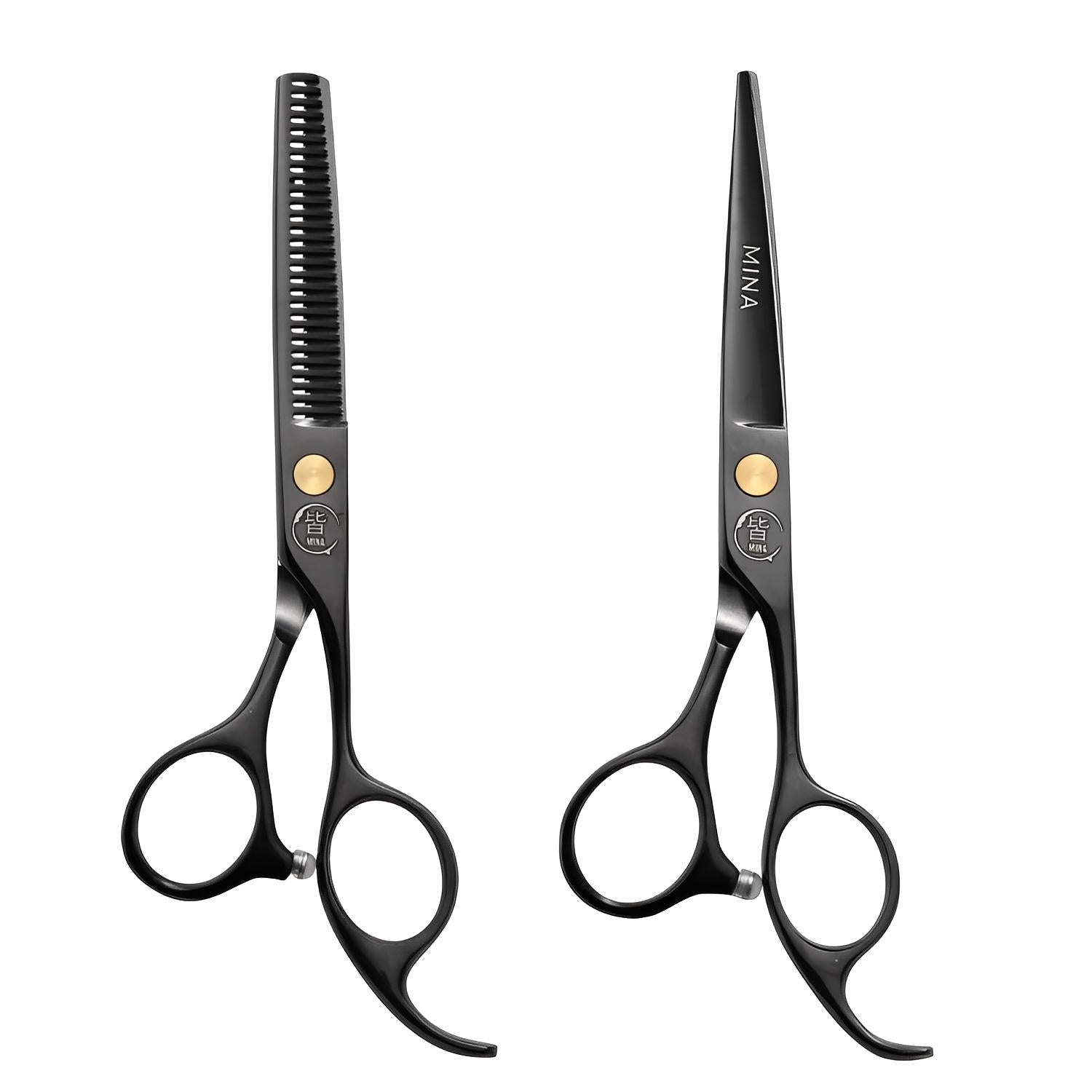
- Flat edge. The Mina Umi and the Mina Black Diamond kit are listed with a flat cutting edge. It meets at a firmer angle, grips the hair a touch, and is the more forgiving of the two. Good for blunt lines and newer hairdressers.
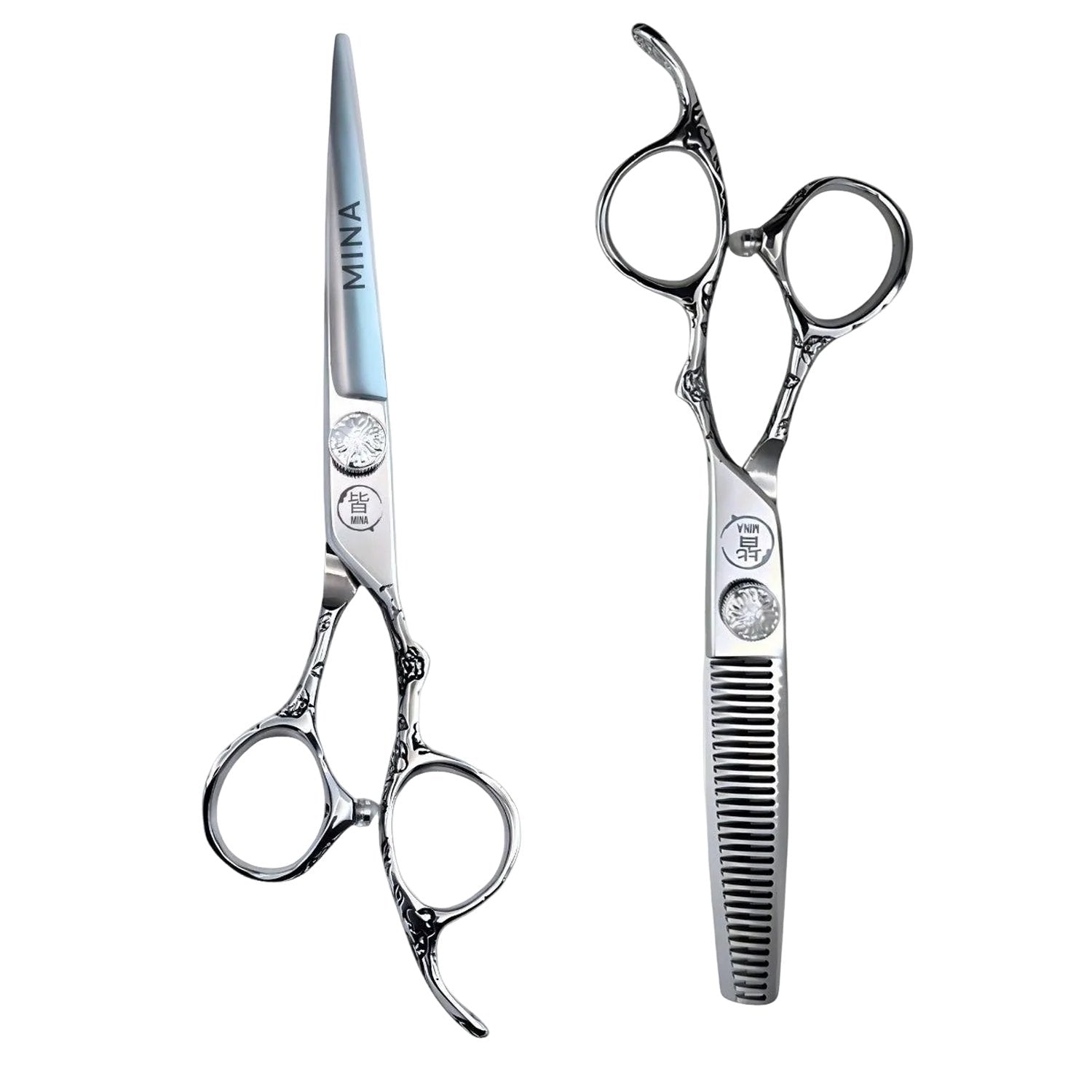
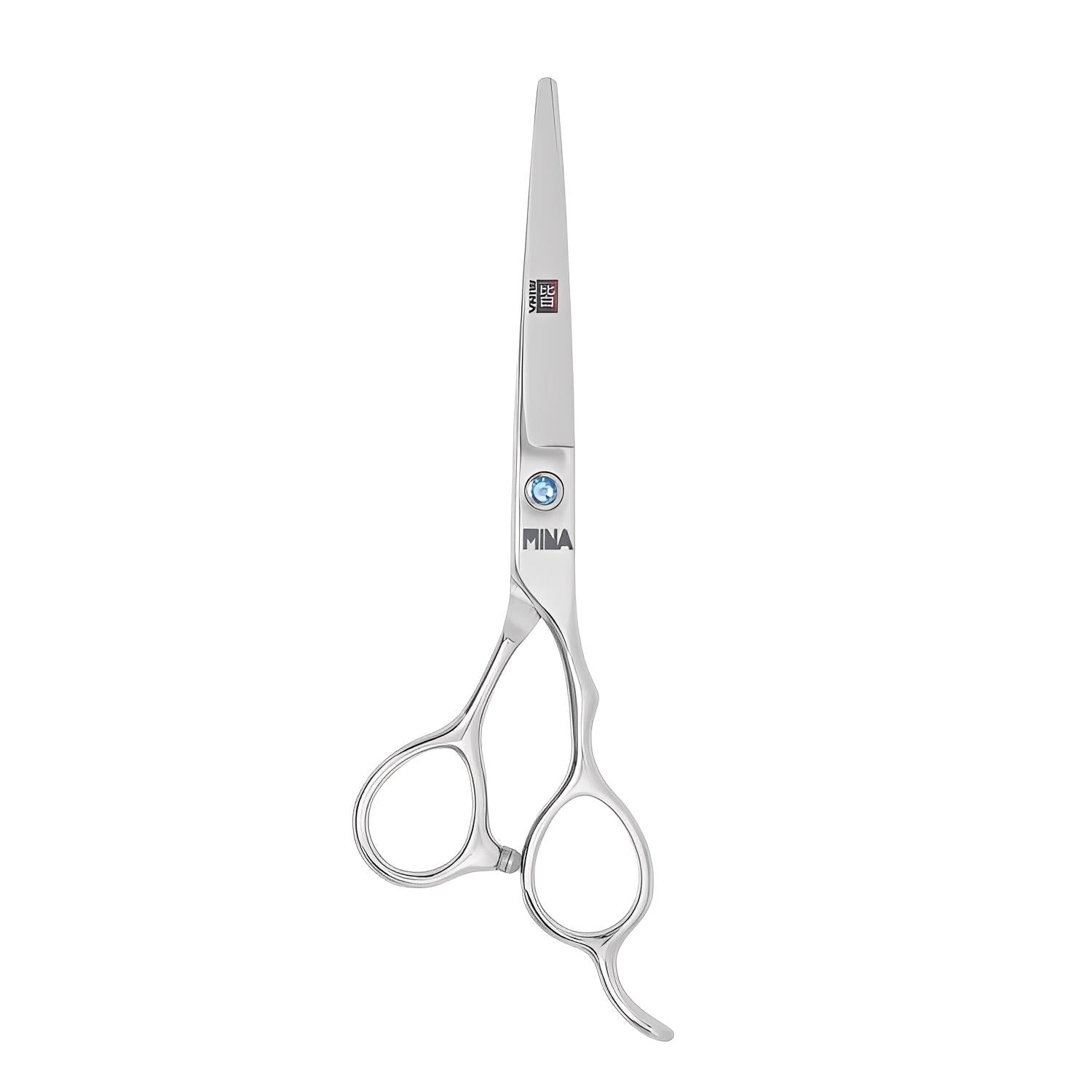
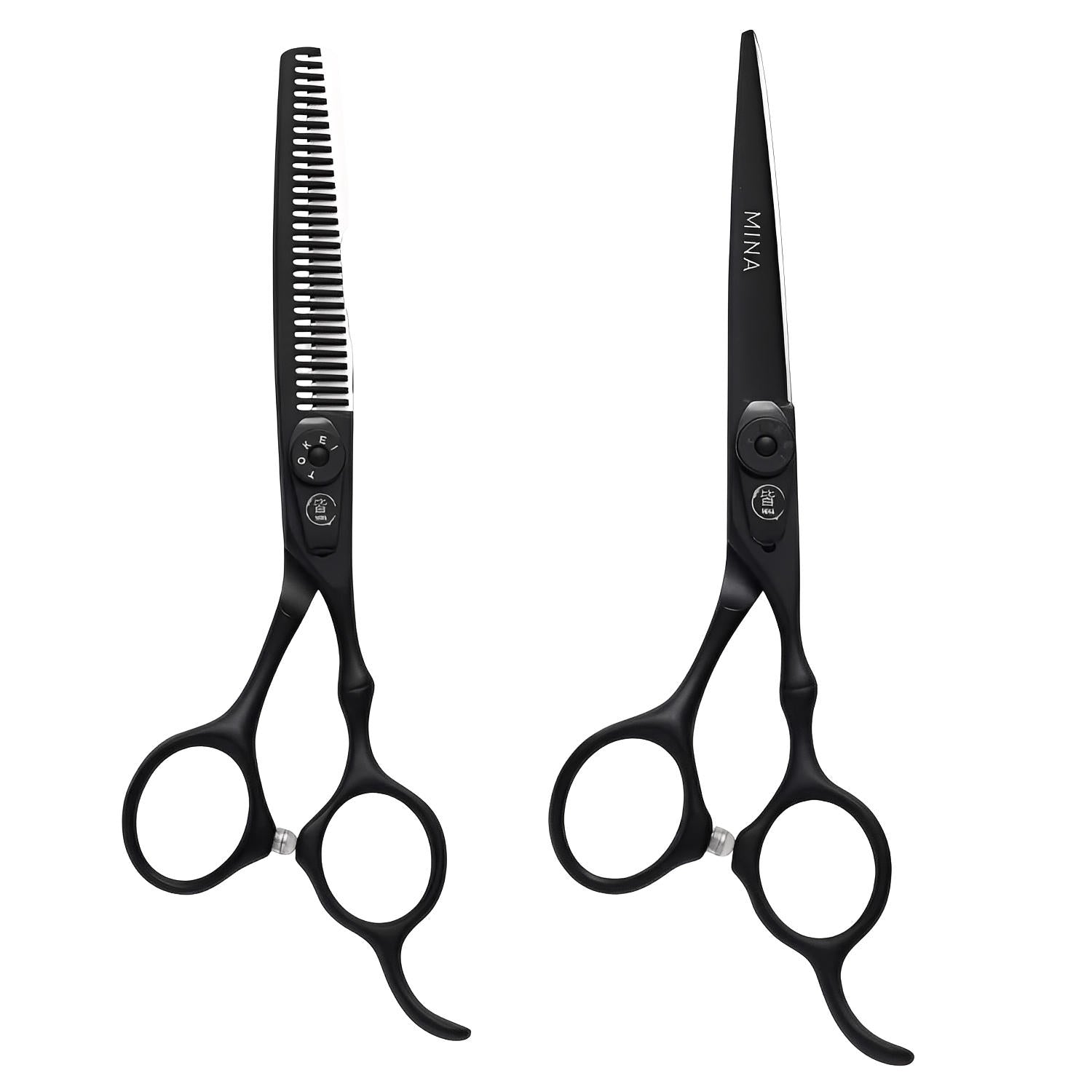
- Slice or convex edge. The Yasaka Offset, the Mina Sakura set and the Mina Timeless set are listed with a slice cutting edge. It's finer and smoother, which is lovely for slide cutting, but it's less forgiving of knocks.
Here's the catch with slice edges: they need a sharpener who knows convex work. Tell whoever sharpens your scissors which edge you have; it's on the product page.
Coated and polished finishes
The Black Diamond kit and the Timeless set have a matte black coating. The Umi has a mirror polish, and the Sakura and Yasaka a polished finish.
A coating needs nothing special. Wipe it with a soft cloth, avoid scrubbing it with anything abrasive, and dry it after it gets wet. Be realistic, too: a coated scissor that works every day picks up small signs of use. A mirror polish shows fingerprints and fine marks more than a matte finish, but they wipe off with the cloth.
Damp, salt and the salon
A lot of New Zealand salons are close to the coast, and damp air and salty spray aren't kind to any steel. Dry your scissors properly after cleaning, never put them away wet, and keep them in their case rather than on an open shelf near the door. If you disinfect your tools, follow the product's directions, then rinse, dry and re-oil the pivot.
Drops and knocks
A dropped scissor is the most common way a good one gets hurt. A fall onto a hard floor can nick the edge or knock the tips out of line. If it happens, check the edge under light and do a test cut on a damp tissue. If it snags or folds, get it looked at before you cut a client with it.
Getting them sharpened
A sharpen is a job for a specialist who works on hair scissors, not a kitchen knife sharpener. How often depends on how many clients you see and how you treat the scissor, so go by how it cuts rather than the calendar. When you send scissors away, pack them in their case and keep a spare to work with while they're gone.
The short version
Wipe after each client, oil and case at the end of the day, check the tension each week, and get them sharpened when they start pushing hair. If you're unsure about anything with a scissor you bought from us, email us; the address is on the contact page.
Back to the NZ guide, or read scissor sizes, sorted and left-handed scissors in NZ.